11 results found under sleeper pads

Under Sleeper Pads
Under Sleeper Pads are elastic elements integrated in the sleeper. This material is an effective way to increase the elasticity of the superstructure and reduce wear and tear on the ballast.
Under Sleeper Pads
Under Sleeper Pads are elastic elements located between the sleeper and the ballast mats. This material is a cost-effective way of increasing the elasticity of the superstructure and reducing wear and tear on the ballast.
Complete Product Range for Vibration and Acoustic Control
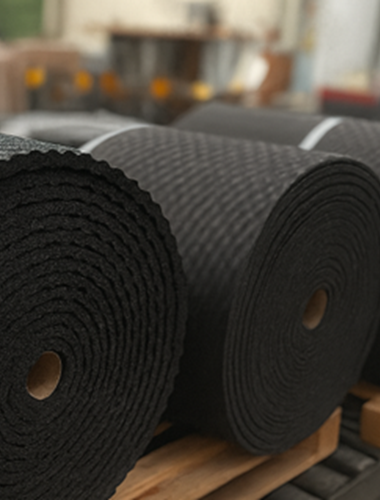
Amorim Cork Solutions offers a broad portfolio of elastomeric components designed for multiple rail infrastructure applications, including but not limited to: Rail pads and baseplate pads for direct-fixation systems Under-ballast mats (UBM) and under-sleeper pads (USP) Floating slab mats (FSM) for slab-track…
Complete Product Range for Vibration and Acoustic Control
Amorim Cork Solutions offers a broad portfolio of elastomeric components designed for multiple rail infrastructure applications, including but not limited to: Rail pads and baseplate pads for direct-fixation systems Under-ballast mats (UBM) and under-sleeper pads (USP) Floating slab mats (FSM) for slab-track…
Rail Pads
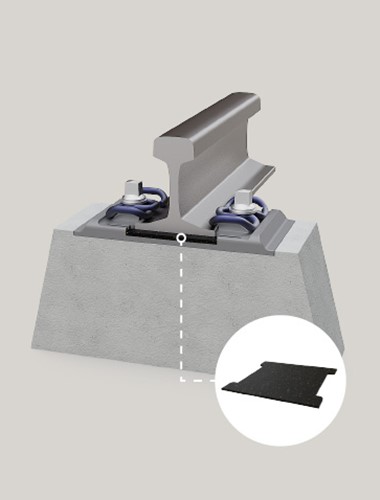
Rail pads are elastic components installed between the rail and the sleeper, designed to transfer loads while filtering high-frequency forces and reducing stress on track structure. They help reduce vibration and structure-borne noise, protect concrete sleepers against crack development and enhance the long-term durabi…

Protecting the Ballast through Superior Load Distribution
The primary function of a rail pad is to ensure smooth load transfer and filter out vibrations. Cork-rubber rail pads are specifically engineered to distribute vertical loads and vibrations from passing trains, which directly protects the sleepers and the ballast. By dampening dynamic loads, these composites reduce tra…
Protecting the Ballast through Superior Load Distribution
The primary function of a rail pad is to ensure smooth load transfer and filter out vibrations. Cork-rubber rail pads are specifically engineered to distribute vertical loads and vibrations from passing trains, which directly protects the sleepers and the ballast. By dampening dynamic loads, these composites reduce tra…
Rail Pad Functions and Requirements
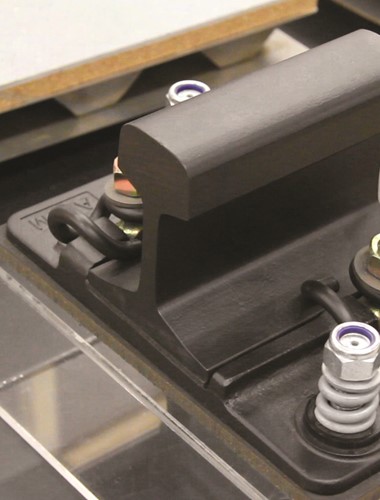
Rail pads serve several essential purposes in the railway context, and over time need to endure millions of cycles of compression, demanding not only high durability but also stable long-term performance. Considering the technical characteristics of the material, rail pads should distribute vertical loads and vibration…
Temperature Sensitivity of Rail Pads
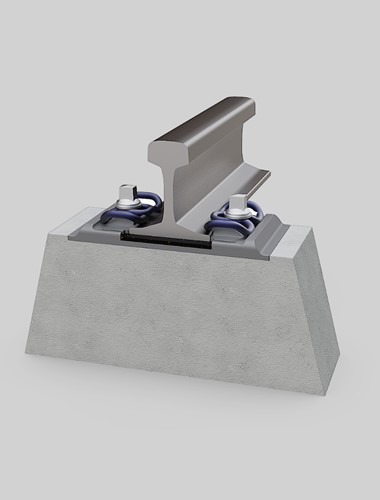
Rail pads must balance stiffness and damping, and for that purpose, two parameters are central, such as: - Shear Modulus: The shear modulus is a measure of a material’s rigidity against shear deformation. A higher shear modulus means that the rail pad is stiffer and deforms less under a given shear stress (load), while…
Temperature Sensitivity of Rail Pads
Rail pads must balance stiffness and damping, and for that purpose, two parameters are central, such as: - Shear Modulus: The shear modulus is a measure of a material’s rigidity against shear deformation. A higher shear modulus means that the rail pad is stiffer and deforms less under a given shear stress (load), while…
Rail Pad Functions and Requirements
Rail pads serve several essential purposes in the railway context, and over time need to endure millions of cycles of compression, demanding not only high durability but also stable long-term performance. Considering the technical characteristics of the material, rail pads should distribute vertical loads and vibration…