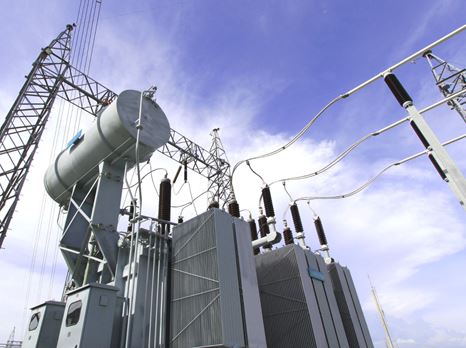
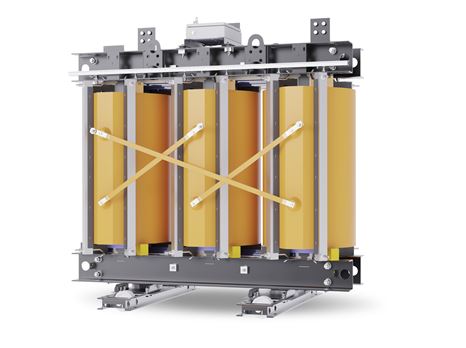
Electrical transformers play an essential role in power distribution networks and are crucial components in the electricity infrastructure.
Due to their importance, replacing a transformer can be a complex and costly process, as well as resulting in interruptions to the power supply. It is therefore vital to ensure that transformers have a long operating life and continue to work efficiently over time, which makes it essential to achieve strict control of vibration, that can lead to wear and tear on internal components. Reducing vibration also makes a direct contribution to reducing noise, which is particularly important given the growing number of transformers installed in residential areas.
Specialised vibration control materials have to be used in order to minimise the progressive degradation of a transformer's internal components. In this context, Amorim Cork Solutions has developed various sustainable cork composite solutions under the Amorim T&D brand, one of which is VC2100. This cork and rubber solution is primarily used as an internal anti-vibration pad in transformers and electrical distributors. Applied as a decoupling support between the transformer’s core and structure, VC2100 can reduce noise by up to 5 dB, improve acoustic performance and increase the equipment’s operating life.
As well as minimising vibration, VC2100 also reduces the pulsation caused by the mechanical movement of the core under magnetisation - absorbing physical vibration and preventing sound propagation. This solution has been widely adopted by manufacturers of low-noise transformers, with installations in urban areas where noise restrictions are more stringent.
Amorim Cork Solutions, through its Amorim T&D range, offers innovative cork and rubber solutions that not only contribute to improving the transformer’s technical performance, but are also a sustainable option. The combination of cork, a 100% natural and renewable material, with rubber results in an efficient and more sustainable solution (when compared to 100% rubber solutions), in line with the principles of sustainability and energy efficiency.
Would you like to know more about this subject?
Let us know your details and we'll get back to you.